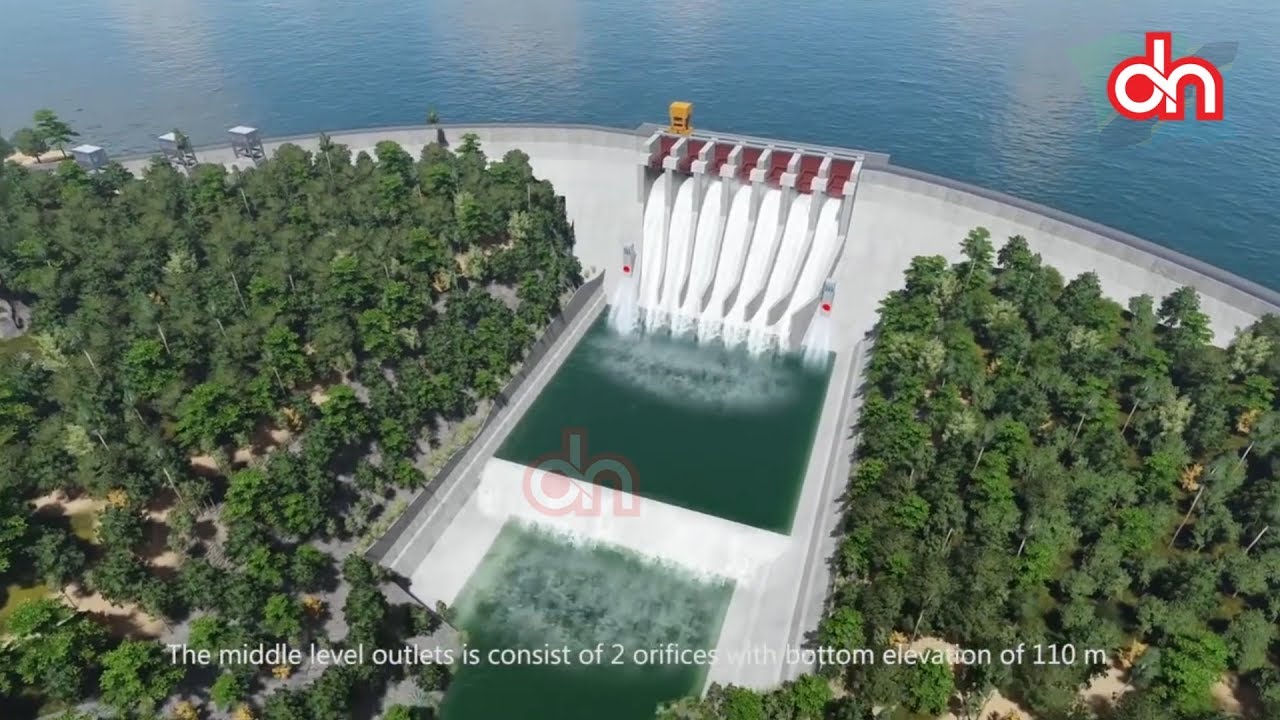
The Julius Nyerere Hydropower Project (JNHPP) has reached 52 percent, with the Government saying it is on track to be completed by June, 2022.
Energy Minister Medard Kalemani issued the update on the hydroelectric dam under-construction across the Rufiji River when he visited the project site at the weekend.
The power station is expected to have an installed capacity of 2,115 megawatts (2,836,000 hp) and to produce 5,920GWh of power annually, which will hugely boost the country's power pool for socio-economic development.
The project will cost a total of 6tri/- to its completion, and the Government has already dished out a total of 2.43tri/-, according to the minister Dr. Kalemani stated that the construction activities were going on well, pointing out that 27 turbines will be installed in the power house, out of which 6 will be fixed in a few days to come in the first round.
Currently, works are still going on to strengthen concrete of walls for tunnels, under which water to be used for generating the turbines will be reserved.
The Minister noted that already the required equipment have arrived at the Dar es Salaam Port, adding that the base where the turbines will be installed has already been constructed.
He further explained that the exercise of filling water into the dam with the capacity of 32.3 billion litres is expected to begin from November 15th this year, to 23rd April next year followed by trials in May before going full operational.
"The Government is determined to ensure this project, which will play a very important role in our country's economy, is finished on time," he said.
Expounding, he noted that completion of the project will provide various economic opportunities like fisheries, tourism and farming which will also benefit the Nation and individuals.
Dr. Kalemani was accompanied by a delegation of 50 Egyptians led by the country's Housing Minister who is also responsible for the supervision of the project, Mr. Assem El Gazzar, Resident Ambassador Mohamed Abdulwafa and various Government Officials from both sides.
He went on to remind two Egyptian contractors - Elsewedy Electric and Arab Construction - which implement the project to continue working hard to achieve the goals.
The JNHP will be the largest by installed capacity in East Africa and among the largest in Africa comparable to Egypt's Aswan High Dam (2,100 megawatts), Mozambique's Cahora Bassa Dam (2,075 megawatts) and Angola's Lauca Dam (2,069 megawatts).
The project is expected to transform the country through the generation and supply of reliable electricity for both domestic and industrial use and thus making the country's manufacturing sector competitive.
The investment and generation costs for the Rufiji project are cheaper than any other alternative source of electricity.
The 2,115-megawatt Rufiji power project would more than double the East African country's current power generation capacity of around 1,600 megawatts.