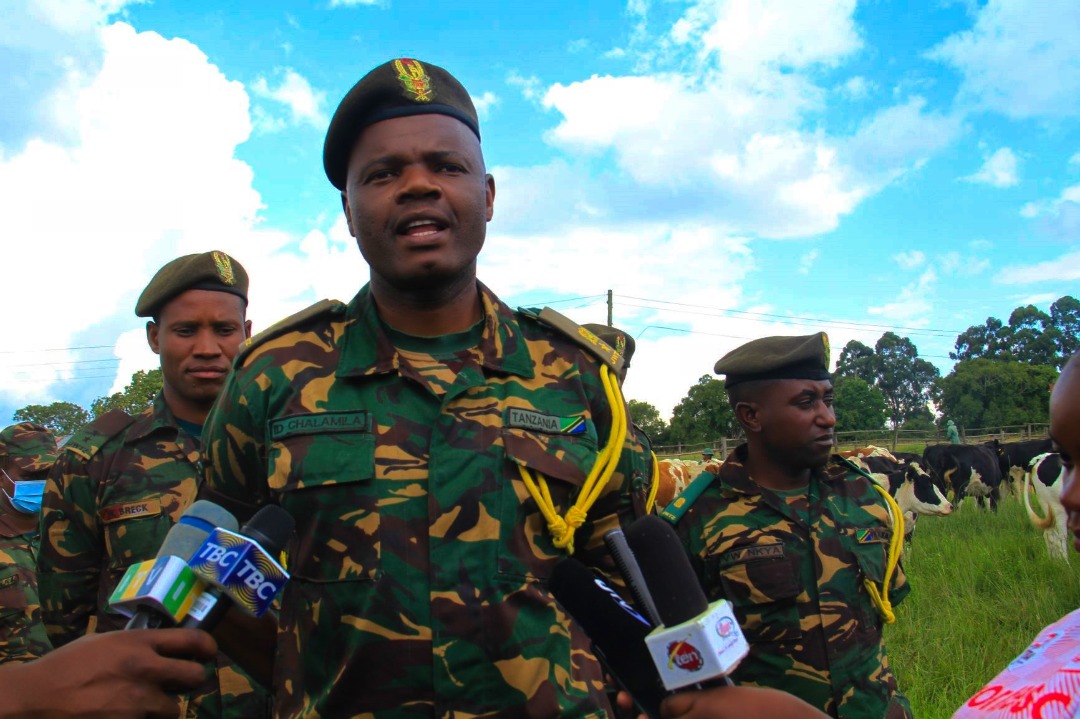
The National Service (JKT) at its 841KJ army camp located in Mafinga District in Iringa Region says it is planning to increase production on different agricultural products.
It also targets to improve pastoralism in robust efforts to ensure the army is fully feeding itself instead of waiting for funds from the central government.
Among key strategies is to increase production of beans, maize and sunflower, which targets to increase hectors from 200 to 500, as well as increasing the number of cows, goats and sheep.
Addressing journalists during a working tour of inspecting various strategic projects on agriculture and livestock, Acting Camp Commandant Lt. Col. Issa Chalamila, said the new strategies were part of implementation of the directives by the Chief of National Service (CNS), Maj. Gen. Charles Mbuge that all military camps should make sure that they have enough food. According to Lt. Col. Chalamila, 841 KJ was specifically based on livestock-keeping - cattle for milk.
"In implementing the CNS directive, we have several strategies to developing cattle to have enough milk that we produce each day," he said adding that they were also distributing milk and cows in different parts of Iringa Region and the neighbouring areas.
He added that they were keeping cows for not only milk but to produce meat for consumption within different national camps and for business purposes.
Currently, according to Lt. Francis Breck, a veterinary officer at the Mafinga-based National Service camp, cows available at the camp was producing between 200 and 250 litres of milk but the plan was to have at least 1,000 litres per day.
At the camp he added, there were also goats producing milk, pigs, sheep and about 192 goats.
The plan he said was to have at least 300 goats, as well as increasing production of cattle that can be able to produce enough milk, as well as feeding all military camps countrywide.
Lt. Col. Chalamila further said the Mafinga camp was also dealing with Agriculture insisting that initially they had 200 hectors of maize for feeding the army as per the directive from CNS, but currently the camp had about 500 hectors of maize, sunflower and beans.
On avocado farming, he said, the army had made a research and realised that it has a larger market inside and outside the country; therefore plans were also in pipeline to start producing avocado.
"We also intend to begin producing onions at Ruaha Mbuyuni in our quest to feed ourselves in all the camps by 100 percent," he noted.
The head of training at the camp, Maj. Victor Nkya said that the ongoing projects had helped in increasing skills to the youth (service men and girls) who are volunteering. "We are receiving feedback regarding our young volunteers who get employed immediately after finishing training here, and records show that Mafinga's national service is doing well," he said